Children's doctor: Dentist
- 3.6
- Rating
- 100.00M
- Installs
- Free
- Price
 Analysis by App-foxy
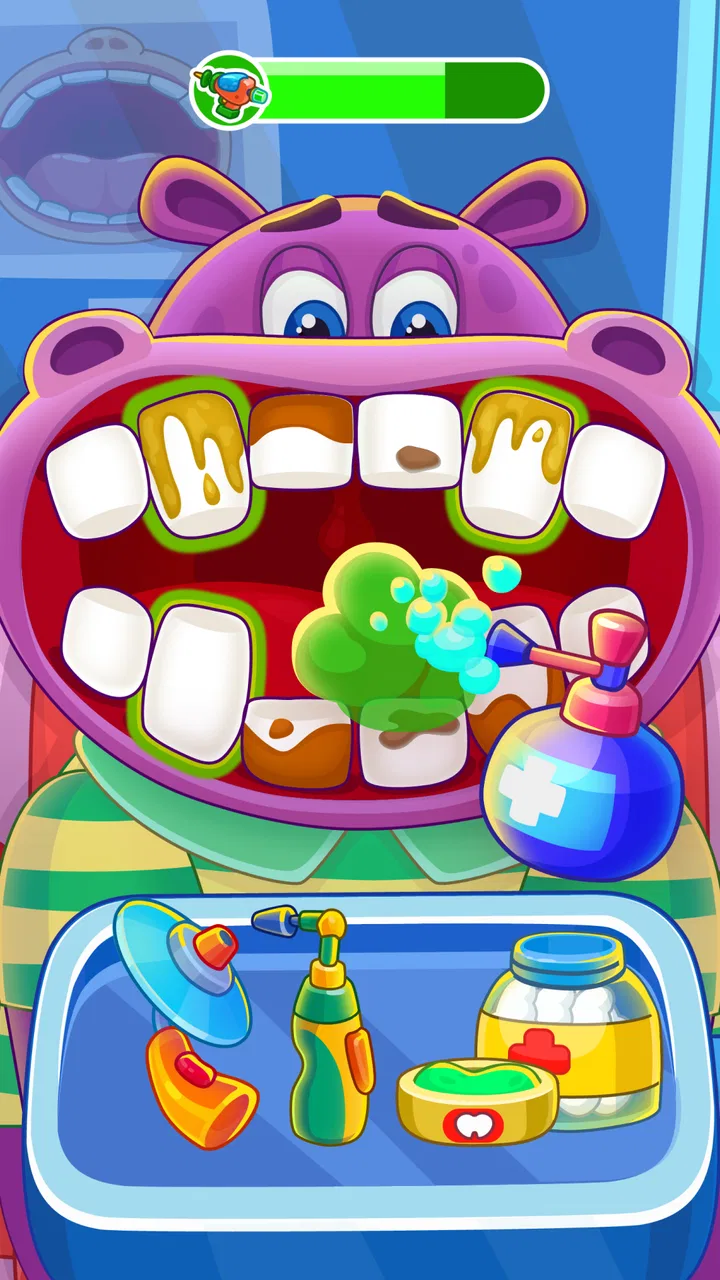
I spent time with Children's doctor: Dentist to see whether its child-friendly dental idea works beyond the cheerful store summary. It is an educational game from YovoGames in which children take care of pet patients and perform simple dental treatments. The concept is easy to understand: a child becomes the dentist, looks after an animal, and learns through playful interaction rather than a lesson that feels like school.
That simplicity is the main reason I can imagine recommending it to a parent of a young child. It gives children a gentle way to talk about teeth, dentists, and personal care. At the same time, it is important to approach it as a short, casual game rather than a complete learning program. The activities are designed for immediate play, not for detailed explanations of oral health or a structured course.
What the dental play experience is really like
The game belongs to the educational category, but its learning comes through role-play. Instead of asking a child to memorize vocabulary or answer a long series of questions, it places the child in a familiar pretend situation: a patient needs help, and the player takes on the caring role. That makes the subject less intimidating, especially for children who feel nervous about visiting a real dentist.
You May Also Like

 AccuWeather: Weather Radar
AccuWeather Review: A Quick, Clear Forecast for Everyday Decisions
For everyday plans, the best forecast is the one you can understand quickly. AccuWeather makes rain timing, radar, and local conditions easy to act on, with a few trade-offs.

 Hill Climb Racing
Why Hill Climb Racing Still Turns Crashes Into One More Run
A tiny car, a bumpy hill and one more upgrade: Hill Climb Racing keeps resurfacing because its simple chaos makes every near-miss feel personal.

 AliExpress - Shopping App
AliExpress Makes Global Shopping Feel Personal, but Shoppers Bear the Risk
AliExpress turns a global marketplace into a pocket-sized discovery engine. Its reach is useful, its shopping loop compelling, and its trade-offs easy to miss.

 Lords Mobile: Kingdom Wars
Lords Mobile Is a Kingdom-Building Routine, Not a Quick Match
A case-by-case verdict on the building, battles, device demands, and social commitments that make Lords Mobile rewarding for some players and exhausting for others.

 PDF Scanner app - TapScanner
TapScanner Makes Paperwork Easier to Capture, Check, and Share
TapScanner makes scanning with a phone feel less like a rescue operation and more like a dependable step in getting work done. Its capture tools are useful, though not flawless.

 Block Blast!
 Shows How Much a Puzzle Game Can Leave Out
A quiet grid game shows why puzzle players increasingly value instant clarity, repeatable skill and low-pressure play—and where the genre still needs to catch up.
More From Our News Desk
View All News


I found the pet-patient approach useful because it changes the emotional angle. A child may not want to think about someone examining their own teeth, yet may happily help an animal. The act of caring can open a conversation about brushing, checkups, and why dentists use different tools. I would use the game as a starting point for that conversation, not as a replacement for advice from a dental professional.
The controls are aimed at children, so the appeal is in tapping, choosing, and completing visible actions rather than mastering complicated movement. That lowers the barrier to entry. A child who is still developing reading confidence can understand much of the experience from the pictures and the direct relationship between the patient and the treatment.
There is also a useful social element in the pretend play, even when an adult is not actively participating. The child is encouraged to act carefully, notice a problem, and respond to it. Those are small decisions, but they give the game more purpose than a purely decorative pet app. I especially like the way the theme can make a dental appointment feel more ordinary and less mysterious.
A practical way to use it with a child
My preferred approach would be a short session before a real appointment or after a child asks a question about teeth. I would let the child play first without interrupting, then ask what happened to the pet and why the patient needed help. This turns the game into a conversation tool. If the child is anxious, I would avoid presenting it as preparation they must complete and instead treat it as optional pretend play.
Another useful routine is to connect the game with brushing time. After playing, a parent can ask the child to show how they care for their own teeth. That does not make the game a dental instruction manual, but it gives the child a familiar image to remember. The benefit comes from the combination of play and a real-world habit, not from leaving the child alone with the screen.
One detail parents should keep in mind is that children can interpret game actions literally. A child may assume that every dental problem is solved by the same simple sequence or that real treatment is always quick and painless. I would therefore explain that the game is pretend and that a real dentist decides what care is appropriate. That small clarification keeps the experience reassuring without allowing it to create unrealistic expectations.
Who will enjoy it most
This is best suited to younger children who enjoy doctor games, animal characters, and direct cause-and-effect activities. It can also work for a child who is beginning to ask why adults look inside their mouth or why brushing matters. The Everyone content rating makes it a natural candidate for family use, although the rating alone does not tell a parent whether the pace, visuals, or level of repetition will suit a particular child.
I would be more cautious about recommending it to an older child looking for serious science content. The educational value is introductory and experiential. A child who wants labeled diagrams, explanations of cavities, quizzes, or a measurable study path will probably find a dedicated learning app more useful. This game is strongest when the goal is comfort, imagination, and a basic connection between care and healthy teeth.
It is also not the right choice for a child who dislikes repeated touch interactions or expects a large adventure with a long story. The dental setting gives the game a clear identity, but it also narrows the range of activities. Parents should choose it because the theme is relevant, not because they expect a broad collection of unrelated mini-games.
Spending, progress, and how fair the experience feels
The game is free to download, which makes trying it relatively easy. It includes in-app purchases priced from $2.49 to $30.99 per item. That range is the most important point for a parent considering the game: the initial download does not tell the whole spending story. I would let the child try the free portion first and decide in advance whether purchases are appropriate.
I would also avoid handing the device over with unrestricted purchase access. Even in a child-focused game, an appealing item can lead to an accidental tap or a request for something the child does not understand as real money. The sensible routine is to keep purchases under adult control and discuss them plainly. If the free experience already serves the purpose of helping a child become comfortable with the dental theme, there may be no reason to spend anything.
The purchase range creates a meaningful difference between this game and a completely self-contained educational activity. A parent who wants a predictable, one-time experience may prefer a paid app with no additional purchase path, if such an alternative fits the child better. On the other hand, a free starting point is valuable when a family is unsure whether the child will engage with the subject at all.
I did not treat the presence of purchases as an automatic reason to reject the game. What matters is whether spending is necessary for the central experience and whether the child can enjoy the role-play without pressure. In my view, the fairest way to use it is as a supervised free activity first. Only consider an optional purchase if the child has clearly returned to the game and the adult has decided that the added value justifies the cost.
Progress is another area where expectations matter. This is not the kind of game I would choose for a child who needs a clear learning record, staged lessons, or a visible sense of academic achievement. The reward is mainly the immediate satisfaction of helping the patient. That can be enough for short sessions, but it may not hold attention as well as an app that introduces new concepts in a carefully measured sequence.
The lack of a formal study structure is not necessarily a flaw. Young children often learn well from repetition and imitation, and a simple dental scenario can be revisited without feeling like a test. Still, parents should decide whether they want entertainment with an educational theme or a curriculum-style tool. Calling it educational is fair, but I would place it closer to guided pretend play than to a digital textbook.
How it compares with ordinary alternatives
Compared with a general doctor role-play game, this one has a more focused purpose. A broad medical game may offer more types of patients or treatments, but it may not give a child as clear a way to talk about brushing and dental visits. The narrow subject is an advantage when teeth are the reason for downloading an app.
Compared with a tooth-brushing timer, the game is more imaginative and potentially more comforting. A timer is better at supporting a real daily routine because it is built around the act of brushing itself. This game is better at making the dentist’s office and dental care feel familiar. I would not use one as a substitute for the other; they solve different problems.
Compared with a serious oral-health education app, this title is easier to approach but less likely to provide detailed explanations. A learning-focused alternative may be preferable for a child who wants to understand anatomy, causes of dental problems, or correct techniques in depth. For a younger child who needs a friendly introduction, the lighter format may be more effective precisely because it does not feel like homework.
That comparison also explains why I would not judge the game only by how much information it contains. Its value is emotional and practical: it gives a child a safe pretend role and a familiar setting. If the child is refusing to discuss dental care, a playful first step can be more useful than a fact-heavy app they will not open.
Device requirements and everyday convenience
The listed minimum operating system is Android 7.0, so compatibility should be checked before installing it on an older device. The current version is 1.5.7. Those details matter when a family is using an older phone or tablet handed down to a child, particularly if the device is already close to its software limits.
Because the game is intended for children, I would test it myself before making it part of a regular routine. The first check should be simple: confirm that the child can understand the interactions without constant adult rescue. The second is practical: watch whether the child remains engaged or quickly shifts to another app. A game can be well matched to a theme and still be a poor fit for one child’s attention span.
I would also play alongside the child at least once. That makes it easier to notice which parts encourage useful discussion and which parts are merely repetitive tapping. It gives the adult a chance to explain the difference between pretend treatment and real dental care, while also showing whether the game creates any anxiety rather than reducing it.
What the published details leave parents needing to judge
The game has an average rating of 3.6 from around 170 thousand ratings, with about 2.5 thousand written reviews. I read that overall signal as mixed rather than decisive. It shows that many people have tried it, but the number alone cannot tell me whether a particular child will enjoy the pace, tolerate the purchase options, or find the activities sufficiently varied.
Its reach is substantial, with over 100 million installs, and that makes it easy to understand why parents may encounter it when searching for children’s doctor games. Popularity is useful evidence that the concept has broad appeal, but it is not proof of a perfect experience. I would still base the decision on the child’s age, interest in pretend play, and the family’s comfort with in-app purchases.
There are a few questions I would answer through a supervised trial rather than assumption. Does the child understand the visual instructions? Does the dental theme feel reassuring or uncomfortable? Is the free portion long enough for the intended use? Does the child return voluntarily, or only play because an adult suggests it? These observations are more useful than a generic promise that every child will learn from it.
I would also avoid using it to diagnose a child’s teeth or to explain a real symptom. A game can present a simplified problem for play, but it cannot inspect a mouth or decide whether professional care is needed. If a child has pain, swelling, bleeding, or another concern, the right response is a qualified dentist, not a game sequence.
My trust verdict after using it
YovoGames has made a focused educational game with a clear audience. The strongest part is the combination of animals, caring behavior, and dental role-play. I can see it helping a parent introduce the idea of a dental visit, especially when a child responds better to stories and pretend situations than to direct explanations.
My reservations are equally clear. The experience should not be mistaken for a complete oral-health lesson, a brushing coach, or a replacement for professional guidance. The free-to-install model is convenient, but the in-app purchase range means adults should manage spending rather than leaving the decision to a child. The mixed average rating also encourages realistic expectations: this is a useful niche game, not an essential tool for every family.
My practical recommendation is to try it as a supervised conversation starter, not as an unattended educational solution. Let the child explore, connect the pretend treatment with everyday tooth care, and stop if the theme causes worry or boredom. If the child enjoys caring for the pet patients, the game can make dental talk easier. If the goal is measurable learning, detailed health information, or a dependable brushing routine, a specialized alternative will be the better choice.
For families who want a free first step into children’s dental games, this is a reasonable option to test. I would keep purchases adult-controlled, use short sessions, and judge success by the conversation it creates rather than by how long the child stays on the screen. Used that way, Children's doctor: Dentist earns a modest recommendation: focused, approachable, and helpful for the right young player, but best understood as gentle pretend play with an educational purpose.
FAQs for Children's doctor: Dentist
01What age group is Children's Doctor: Dentist suitable for?
Children's Doctor: Dentist is designed primarily for children aged 4 to 8 years. The app features engaging and educational gameplay that helps young kids learn about dental care in a fun way. The interface is intuitive and colorful, making it easy for young children to navigate and enjoy.
02Does Children's Doctor: Dentist contain any in-app purchases or ads?
Yes, Children's Doctor: Dentist includes in-app purchases and ads. While the core gameplay is free, there are additional features and items that can be unlocked through purchases. Ads can also appear during gameplay, so it's advisable to supervise younger children while they play.
03Is Children's Doctor: Dentist available on both Android and iOS platforms?
Yes, Children's Doctor: Dentist is available for download on both Android and iOS platforms. You can find the app on the Google Play Store for Android devices and the Apple App Store for iOS devices. Ensure your device meets the necessary system requirements for smooth gameplay.
04What educational benefits does Children's Doctor: Dentist offer?
Children's Doctor: Dentist offers several educational benefits, including teaching children about oral hygiene and the importance of dental care. Through interactive gameplay, kids learn how to brush teeth properly, the effects of sugary foods on dental health, and the basics of dental procedures, fostering early learning in a playful context.
05Can Children's Doctor: Dentist be played offline?
Children's Doctor: Dentist can be played offline after the initial download and installation. However, some features, such as in-app purchases or updates, will require an internet connection. Playing offline ensures that young players can enjoy the game without interruptions or exposure to online ads.
Pros
- Engaging and colorful graphics.
- Simple controls for young users.
- Educational content on dental care.
- Encourages role-playing and creativity.
- No in-app purchases
- safe for kids.
Cons
- Limited replay value.
- Repetitive gameplay over time.
- Lacks advanced settings for parents.
- Background music can be repetitive.
- Requires internet for some features.

Children's doctor: Dentist
Gallery